Why Keys and Deadbolts Aren’t Enough for Your Business Anymore
If your Las Vegas business still relies on traditional locks and keys as its primary security layer, you’re operating with a vulnerability that grows every time an employee leaves, a key gets copied, or someone forgets to lock up at closing.
Keys can’t tell you who opened a door or when. They can’t be revoked remotely. They can’t restrict access to certain areas or certain hours. And in a city like Las Vegas — where employee turnover in hospitality, retail, and service industries is among the highest in the country — rekeying every time someone leaves is expensive and impractical.
Modern access control systems solve these problems. They give you granular control over who enters what, when, and they create an audit trail that traditional locks simply can’t provide. At ASAP Security, we’ve been installing and managing commercial security systems across the Las Vegas valley since 2003 — and access control is one of the highest-impact upgrades we recommend to business owners.
- Traditional keys create untrackable security gaps — especially with high employee turnover
- Modern access control uses keycards, fobs, mobile credentials, or biometrics
- Audit trails show exactly who accessed which door and when
- Cloud-managed systems let you grant or revoke access remotely in seconds
- Integration with cameras and alarms creates a complete commercial security ecosystem
How Access Control Systems Work
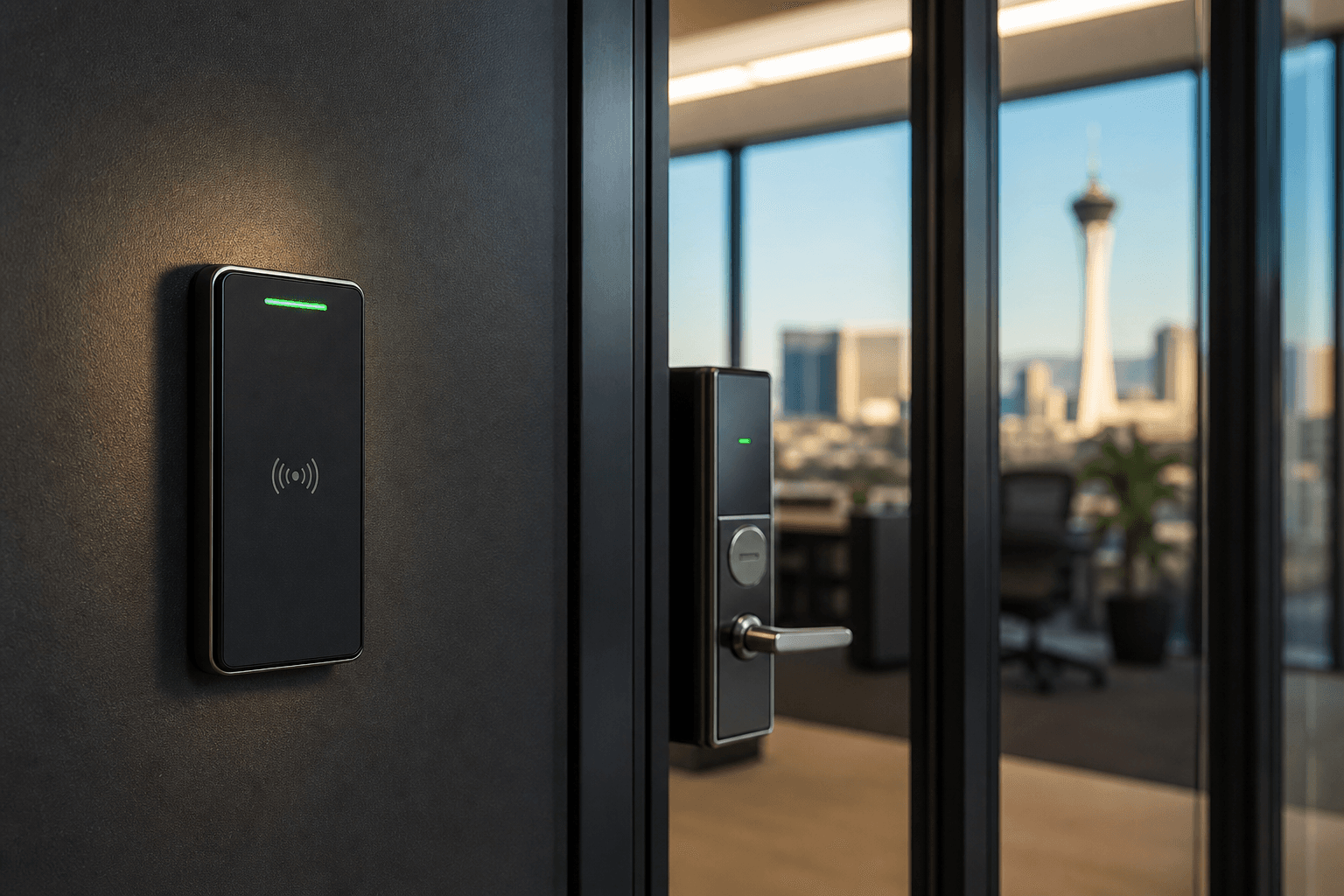
At the most basic level, an access control system replaces a mechanical lock with an electronic one. Instead of a physical key, authorized users present a credential — a keycard, key fob, PIN code, mobile phone, or biometric scan — to a reader mounted near the door. The system checks the credential against a database of permissions and either grants or denies entry.
What makes this powerful isn’t the electronic lock itself — it’s the management layer behind it:
- Centralized administration: Add or remove users from a single dashboard, whether you have one door or fifty
- Time-based permissions: Allow employees access only during their scheduled shifts
- Zone restrictions: Give warehouse staff access to the warehouse but not the executive offices — and vice versa
- Instant revocation: When an employee leaves, disable their credential in seconds from anywhere with an internet connection
- Audit logging: Every access event is recorded with a timestamp, credential ID, and door location
For businesses with multiple locations across the Las Vegas valley — from a Summerlin office to a Henderson warehouse to a retail space near the Strip — cloud-managed access control lets you administer everything from one platform.
Types of Access Control Credentials
Not all credentials are created equal. The right choice depends on your business type, number of employees, and security requirements.
Keycard and Key Fob Systems
The most common commercial access control credential. Proximity cards or fobs use RFID technology — the user holds the card near the reader and the door unlocks. They’re inexpensive, easy to issue, and familiar to most employees.
Best for: Office buildings, warehouses, retail back-of-house areas, HOA community common areas
Limitation: Cards can be shared or lost. Pair with camera verification at sensitive entry points for added security.
Mobile Credentials
Employees use their smartphones as their access credential via Bluetooth or NFC. No physical card to lose, and the credential is tied to a specific device that most people never leave behind.
Best for: Tech-forward offices, businesses that want to eliminate physical credential management, property managers who manage multiple buildings
Limitation: Requires employees to have compatible smartphones and keep them charged.
PIN Code Access
A numeric keypad where users enter a code. Simple and requires no physical credential at all.
Best for: Low-security interior doors, break rooms, supply closets
Limitation: PINs get shared. A code written on a sticky note defeats the entire purpose. Use only for non-critical access points.
Biometric Systems
Fingerprint scanners, facial recognition, or iris scanners provide the highest level of identity verification — the credential is the person themselves.
Best for: Server rooms, pharmaceutical storage, cash handling areas, executive offices
Limitation: Higher cost per reader. Some employees have concerns about biometric data privacy — address these proactively with clear data handling policies.
Multi-Factor Authentication
For high-security areas, require two credentials: a keycard plus a PIN, or a mobile credential plus a fingerprint. This ensures that a stolen card alone isn’t enough to gain access.
Why Las Vegas Businesses Face Unique Access Control Challenges
Las Vegas has business characteristics that make access control more critical than in many other markets:
High Employee Turnover
The leisure, hospitality, and retail sectors — which dominate the Las Vegas economy — have annual turnover rates that regularly exceed 70%. According to the U.S. Bureau of Labor Statistics, the accommodation and food services industry consistently leads all sectors in separation rates. Every departure is a potential security gap if credentials aren’t managed properly.
With a modern access control system, deactivating a former employee takes seconds. With traditional keys, it requires rekeying — which most businesses don’t do until something goes wrong.
Extended Operating Hours
Many Las Vegas businesses operate 24/7 or well past normal business hours. Access control with time-based permissions ensures that the night cleaning crew can enter the building at 11pm but can’t access the finance office. A delivery driver can reach the loading dock during the 6am window but nowhere else.
Multiple Access Zones
Businesses near the Strip and in commercial districts often have complex layouts: public-facing areas, employee-only zones, management areas, secure storage, and loading areas. Traditional lock-and-key setups require employees to carry multiple keys. Access control consolidates everything into a single credential with zone-specific permissions.
Compliance Requirements
Healthcare facilities, financial services offices, and cannabis dispensaries in Clark County face regulatory requirements for access logging and restricted-area controls. Modern access control systems generate the compliance-ready audit reports these regulations demand — something a physical key can never provide.
Integrating Access Control with Your Existing Security System
Access control is most powerful when it works alongside your other security components rather than operating in isolation.
Camera Integration
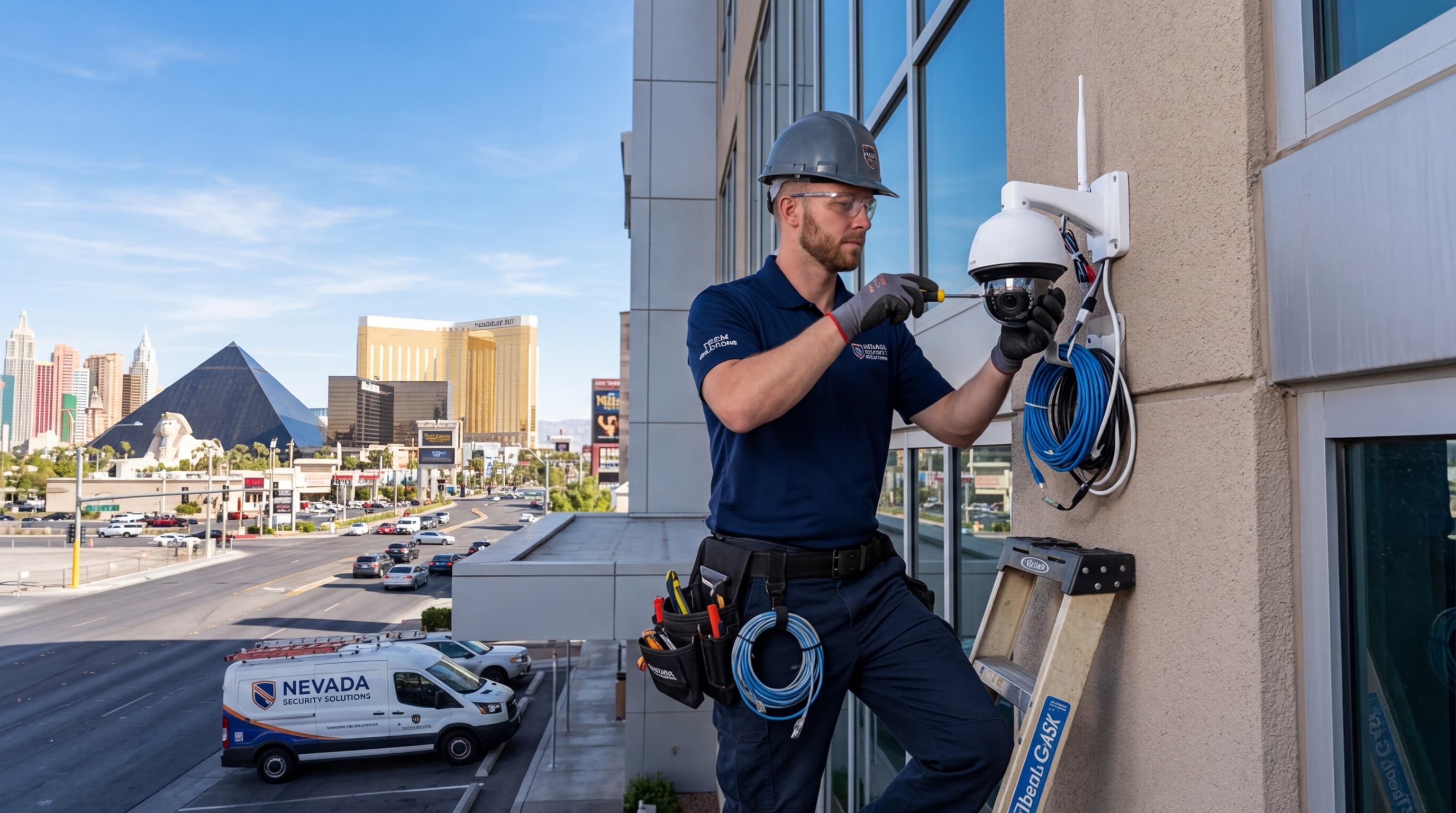
When an access event occurs — especially a denied entry attempt — the system can trigger the nearest security camera to capture video of who was at the door. This pairing of access logs with visual verification is one of the most effective tools for investigating incidents after the fact.
Alarm System Integration
Your access control system can communicate with your monitored alarm. When the last authorized person leaves and the building is empty, the alarm arms automatically. When the first person arrives in the morning and presents their credential, the alarm disarms. No more relying on someone to remember to set the alarm — and no more 6am false alarm calls because someone forgot the disarm code.
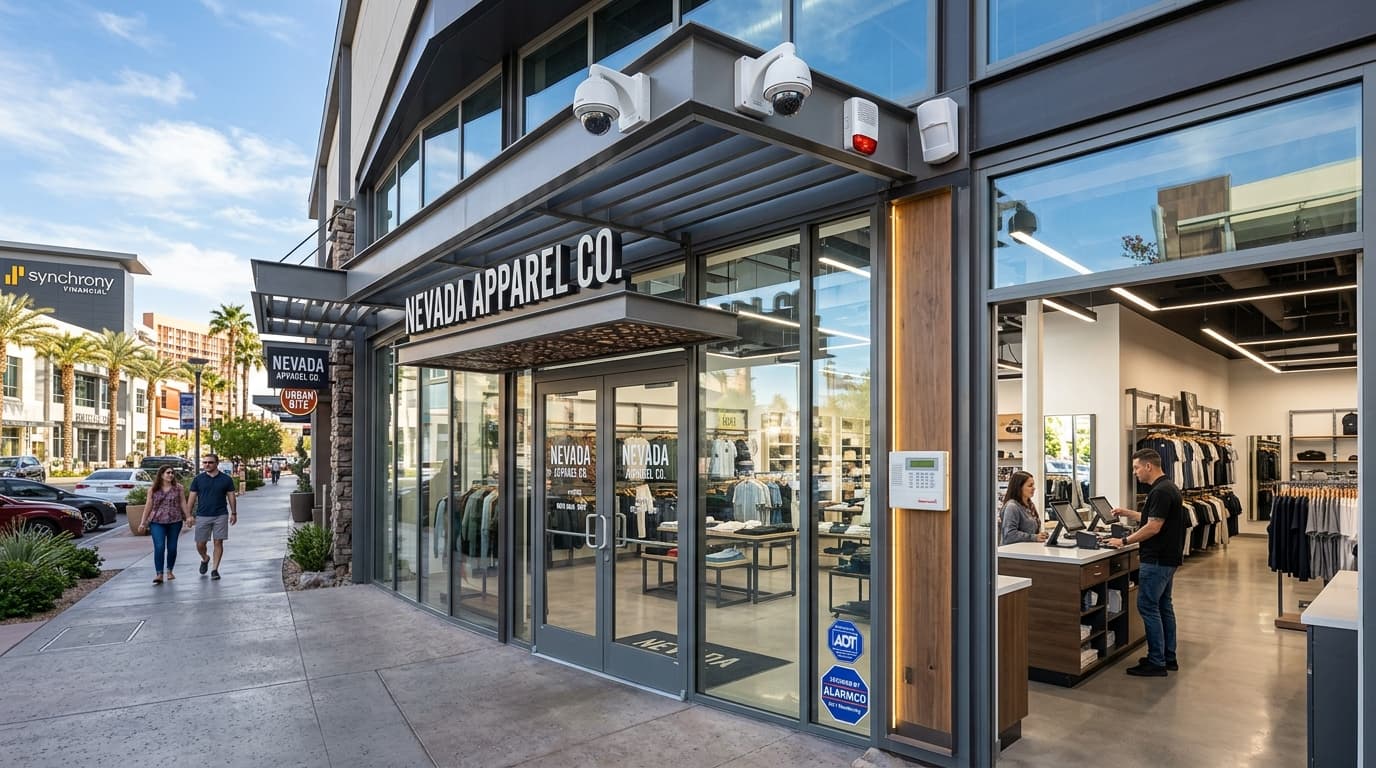
Our commercial security packages are designed for exactly this kind of integration — cameras, alarms, and access control working as a unified system.
Lockdown Capabilities
In an emergency, a centralized access control system can lock down an entire facility instantly — something that’s impossible with mechanical locks. This capability is increasingly important for schools, healthcare facilities, and businesses with public-facing operations.
Cloud-Managed vs. On-Premise Systems
Cloud-managed systems store your access database and management interface in the cloud. You can add users, change permissions, and review logs from any browser or mobile app. Updates happen automatically. This is the direction the industry has moved for businesses with fewer than 500 doors.
On-premise systems keep everything on a local server. They offer maximum control and don’t depend on internet connectivity for basic door operations. They’re still preferred for high-security government and defense applications.
Our recommendation for most Las Vegas businesses: Cloud-managed. The convenience of remote administration — especially for multi-location businesses — outweighs the marginal benefits of on-premise for the vast majority of commercial applications. Door controllers continue to function locally during internet outages; the cloud layer is for management and reporting.
What Access Control Costs — and What It Saves
A basic commercial access control system for a small Las Vegas business — covering 2–4 doors with keycard readers, a controller, and cloud management — typically runs between $2,000 and $5,000 installed, with monthly cloud management fees in the $20–50 range.
That cost is often recovered quickly:
- Eliminated rekeying costs: At $150–300 per rekey event, businesses with high turnover save thousands annually
- Reduced theft and shrinkage: Audit trails deter internal theft — the National Retail Federation reports that employee theft accounts for roughly 29% of retail shrinkage
- Insurance discounts: Many commercial insurance carriers offer premium reductions for businesses with electronic access control
- Liability protection: Access logs provide documentation in the event of workplace incidents, disputes, or regulatory audits
Getting Started
If your Las Vegas business is still relying on traditional locks — or if you have an aging access control system that’s become difficult to manage — ASAP Security can help. We start every commercial project with a free on-site assessment: we walk your facility, identify access points and security zones, and recommend a system that fits your operations and budget.
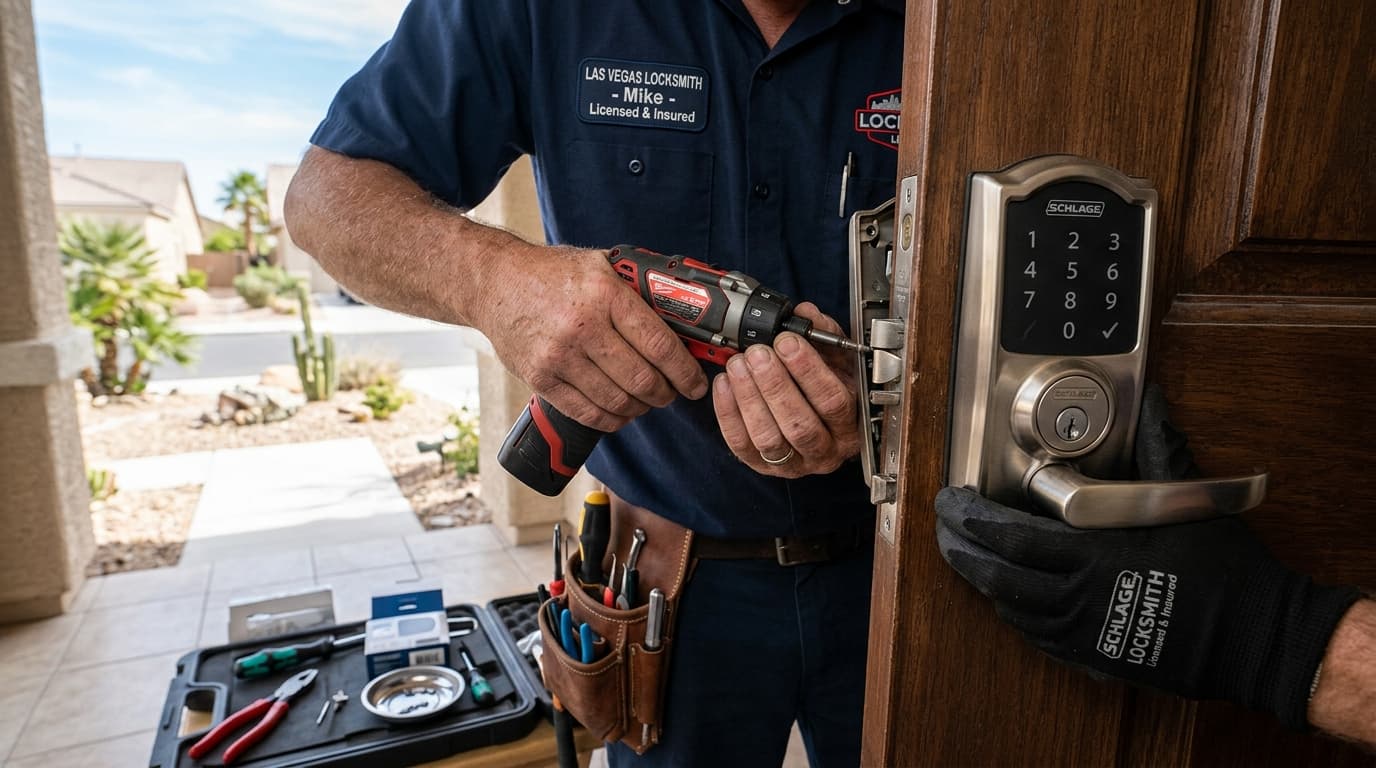
No high-pressure sales. No unnecessary upsells. Just honest advice from a team that’s been securing Las Vegas businesses since 2003. Our locksmith services team handles everything from initial installation to smart lock upgrades and ongoing maintenance.
Contact us today to schedule your free commercial security assessment, or call us directly at (702) 870-8880.