A Las Vegas rental property security checklist gives property managers a repeatable way to regain control of keys, codes, devices, and records between occupants. The goal is not to replace every lock or install new equipment at every turnover. It is to confirm who can enter, what still works, what changed during the tenancy, and what the next resident needs to know before receiving possession.
Turnovers compress many responsibilities into a short window. Maintenance teams, cleaners, vendors, leasing staff, and prospective tenants may all need temporary access. Without a written security handoff, old keys can remain unaccounted for, alarm codes may stay active, and camera or smart-device accounts may still be connected to a former user. A short, documented review closes those gaps without turning the make-ready process into a technology project.
- Record every key, credential, code, remote, and connected security account before work begins
- Inspect exterior doors, windows, gates, garages, and common access points for damage or changes
- Rekey or replace hardware when key custody or lock condition cannot be confirmed
- Remove former users from alarms, cameras, doorbells, smart locks, and access-control systems
- Test the final setup and give the incoming tenant a simple written security handoff
Las Vegas Rental Property Security Checklist: Start With Access Control
Begin the security review before cleaners and repair vendors arrive. Create a simple access register for the unit or property and list every item that can open, disarm, or remotely view it:
- Exterior door keys and mailbox keys
- Garage remotes, gate transmitters, and parking credentials
- Keypad, alarm, smart-lock, or access-control codes
- Camera and video-doorbell accounts
- Mechanical keys held by management or approved vendors
- Shared-building fobs, cards, or mobile credentials
- Lockboxes and temporary construction codes
Compare the register with the items returned at move-out. A missing item does not automatically tell you what work is required, but it identifies a question that must be resolved. Record who approved the final decision and when the credential was changed, disabled, returned, or replaced.
For multi-unit communities or portfolios, use unique identifiers rather than writing access codes directly on a general turnover sheet. Limit sensitive access information to the people who need it. ASAP Security’s property manager security services are designed around repeatable locksmith and security support for managed properties across Southern Nevada.
Inspect Doors, Locks, Windows, Gates, and Garages
Walk the exterior boundary before focusing on electronic systems. Turnovers are a useful time to catch ordinary wear, tenant-added hardware, and maintenance changes that affect how an opening closes or locks.
Exterior doors
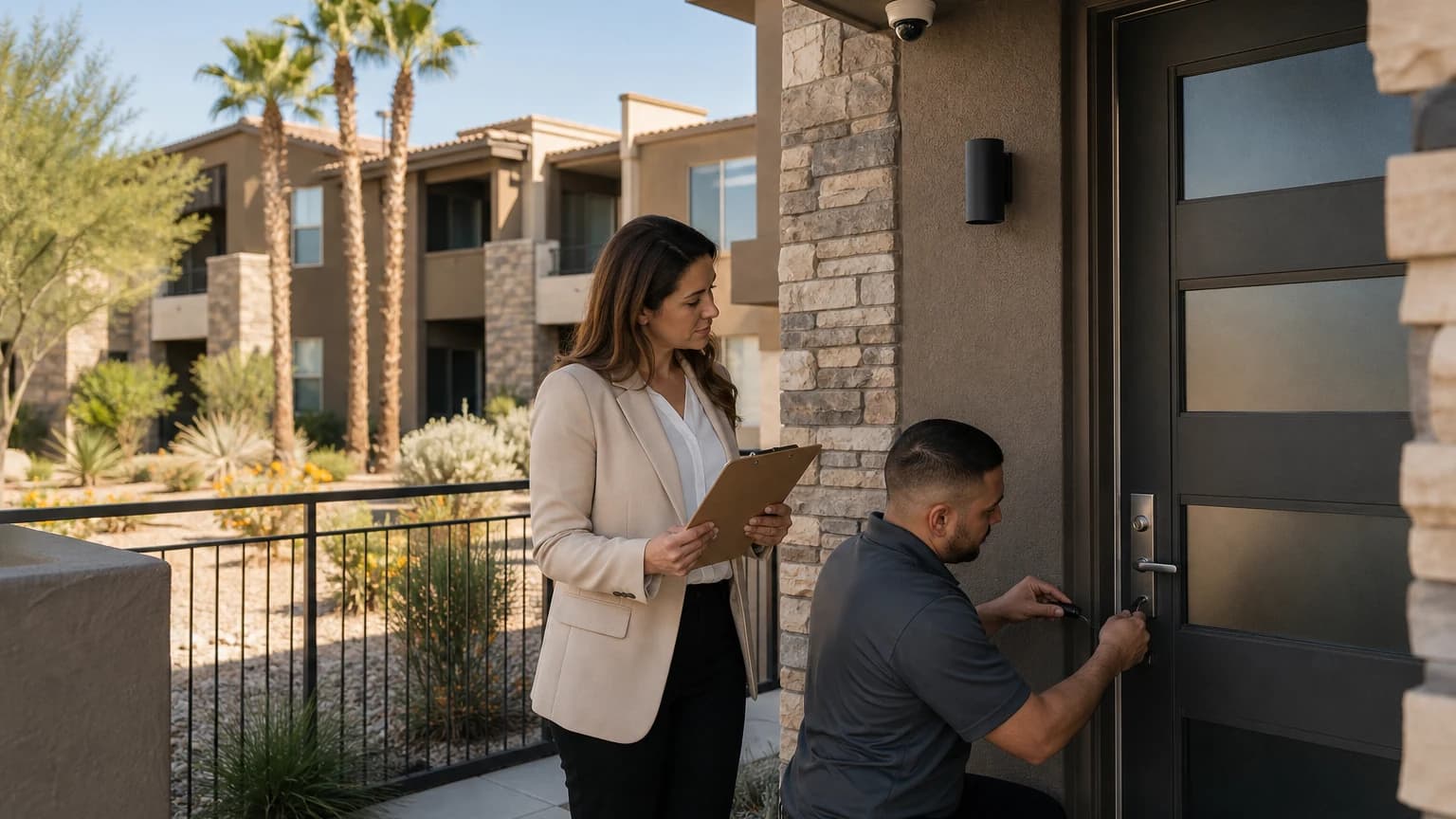
Open and close each exterior door from both sides. Confirm that the latch aligns, the deadbolt extends without forcing the door, screws and strike hardware are secure, and the door does not bind against the frame. Check for loose handles, damaged cylinders, improvised repairs, or holes left by removed devices. A functioning lock should not depend on lifting, pulling, or pushing the door into a special position.
Windows and patio openings
Verify that accessible windows and patio doors close fully and that their locking hardware is present and usable. Inspect screens and tracks for damage that could affect normal operation. Do not add secondary devices that interfere with required use or safe exit; property-specific safety and code questions should be confirmed with the appropriate qualified professional.
Gates, garages, and shared approaches
Test side gates, courtyard entries, garage doors, and the door between the garage and living area. Account for remotes and keypad codes. At a shared property, also confirm that building entry, pedestrian gates, pool or amenity access, and parking credentials follow the manager’s current authorization list.
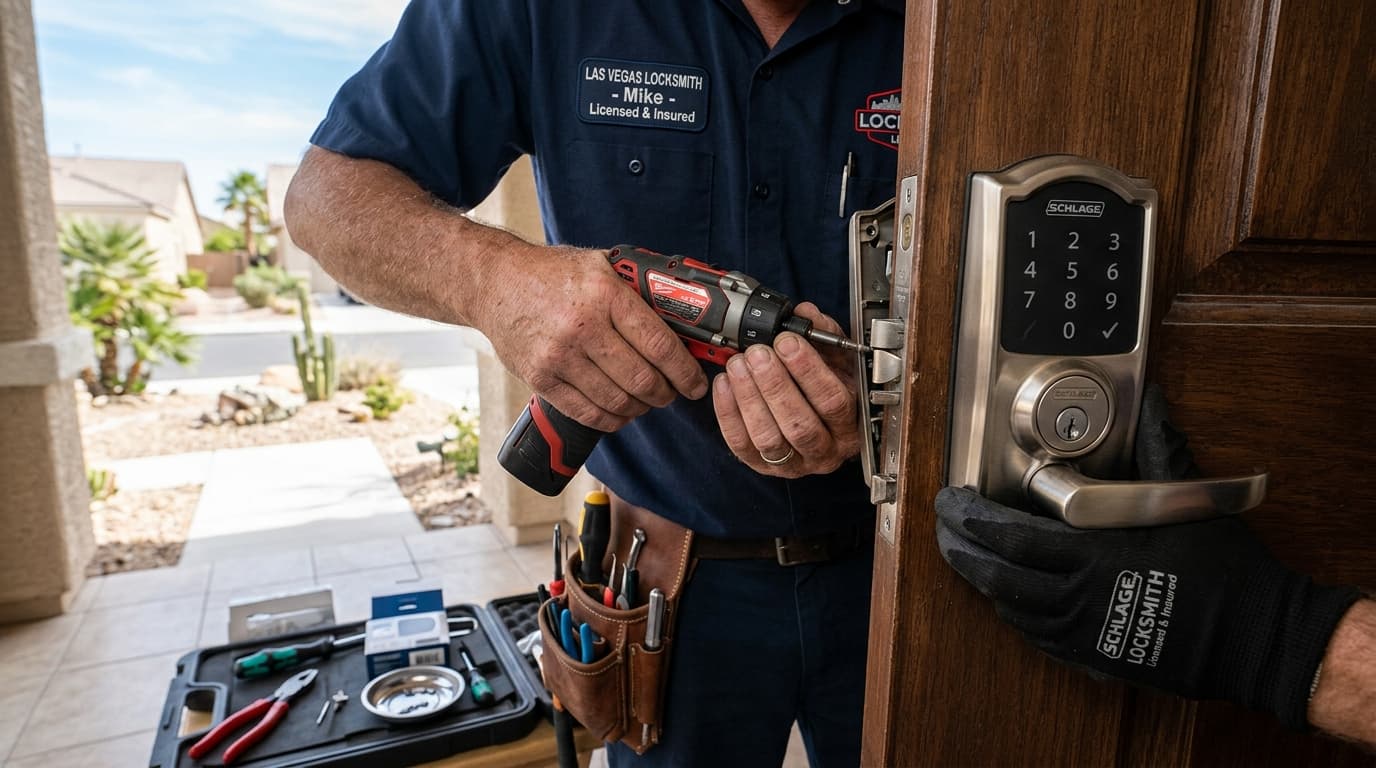
If key custody is uncertain or hardware needs professional attention, use a licensed provider. ASAP Security holds Locksmith License LV L0600194-E107635, and its Las Vegas locksmith services include rekeying and lock work for residential and managed properties.
Decide Whether to Rekey, Repair, or Replace
These actions solve different problems:
- Rekeying changes which key operates an otherwise serviceable lock.
- Repairing restores proper operation when alignment, fasteners, or components are worn or damaged.
- Replacing is appropriate when hardware is damaged, unsuitable for the opening, or no longer supports the property’s access plan.
Do not choose solely by appearance. A newer-looking lock may still have unknown keys in circulation, while an older commercial-grade lock may only need service and a controlled rekey. Ask the locksmith to document which cylinders were addressed and how many new keys were issued.
Standardizing compatible hardware across a portfolio can simplify future service, but avoid creating uncontrolled master-key access. The design should limit each credential to the doors its holder actually needs. The related guide on access control systems for Las Vegas businesses explains how role-based credentials and audit trails differ from traditional keys when a property needs more structured control.
Reset Alarms, Cameras, Doorbells, and Connected Devices
Physical key control is only half of a modern turnover. Create a separate digital-access step for every connected security device that remains with the property.
Alarm systems
Remove departing users and disable codes that are no longer authorized. Confirm the manager or owner has administrative control, update contact information when required, and test the system through the approved process. Document sensor or keypad issues for service instead of assuming a successful arm command proves every device works.
Cameras and video doorbells
Confirm who owns the equipment and associated account. Remove former user access, review camera placement, and make sure the incoming tenant understands what is installed. Avoid assumptions about recording or privacy responsibilities. If a device belongs to the former tenant, document its removal and inspect the mounting area and wiring before the handoff.
Smart locks and access-control credentials
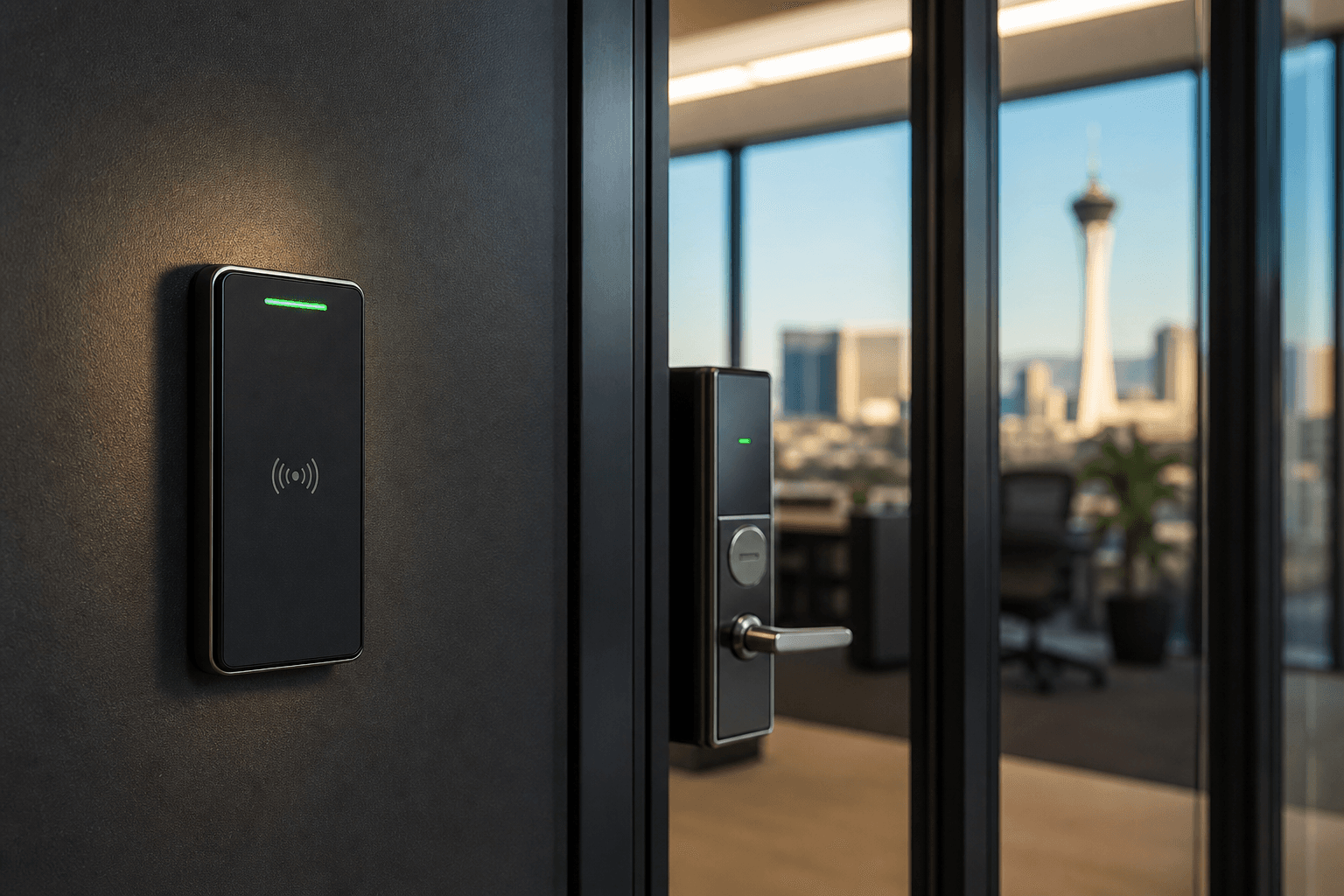
Delete old PINs, fobs, cards, and mobile credentials. Create separate credentials for management, residents, and approved vendors rather than sharing one code. When temporary access is needed during make-ready work, set a narrow access window where the system supports it and disable the credential as soon as the work is complete.
Network-dependent equipment
Identify which devices rely on property-provided internet and which will depend on the tenant’s account. A camera, doorbell, or hub that appears powered on may not be connected or manageable after the previous network is removed. Include reconnection ownership in the tenant handoff so the device is not mistaken for an active security layer.
Control Vendor Access During the Make-Ready Window
The turnover period can create more access, not less. Cleaners, painters, flooring crews, inspectors, and maintenance technicians may all enter before a new tenant arrives. Manage that window deliberately:
- Assign a unique temporary code, credential, or controlled key when feasible.
- Record the vendor, authorized dates, approved access points, and person responsible for closeout.
- Avoid hiding permanent keys or sharing a long-term manager code by text.
- Retrieve physical credentials and disable temporary digital access when the task ends.
- Review unusual access events or unresolved key custody before the final tenant handoff.
This process supports accountability without making unsupported assumptions about a vendor. It also prevents a temporary access method from becoming a permanent, undocumented entry path. For a broader review of operational gaps, see the guide to security mistakes Las Vegas businesses make.
Test the Property as the Incoming Tenant Will Use It
Complete a final walkthrough after repairs and cleaning. Use the actual keys, remotes, codes, and apps designated for the new tenant rather than relying only on an administrator account.
Confirm that:
- Every issued key operates only its intended opening
- Doors, windows, gates, and garage access close and lock normally
- Former credentials are disabled
- New credentials work at the correct doors and times
- Alarm arming and disarming follow the approved test process
- Installed cameras or doorbells are assigned to the correct account
- Visible device placement matches the documented property setup
- Management retains only the access authorized by its policy
- The access register matches the final issued inventory
If the rental is in a managed community, coordinate unit-level changes with HOA or building access rules. ASAP Security also supports HOA community security planning, where unit, gate, amenity, and shared-area access may need to work together.
Give the New Tenant a Clear Security Handoff
A good handoff is short enough to use. Provide the new tenant with an inventory of issued keys and credentials, basic operating instructions, the process for reporting lost access items, and the correct contact for system trouble. Explain which equipment belongs to the property and which accounts the tenant must activate or maintain.
Do not bury security instructions inside a long move-in packet without calling attention to them. Walk through the primary door, garage or gate access, alarm controls, and any installed camera or doorbell. Have the tenant acknowledge the issued inventory according to the manager’s established process.
Managers can also direct residents to public crime-prevention resources. The Las Vegas Metropolitan Police Department offers a free home security survey through Crime Prevention Specialists. That public service can complement the property’s equipment review with practical observations about the residence and daily security habits.
Frequently Asked Questions
Should locks be rekeyed after every tenant turnover?
Property managers should verify who may still have working keys and follow the property owner’s policy and applicable requirements. Rekeying is a practical way to restore control when key custody cannot be confirmed, but the correct scope depends on the property, lock condition, and management plan.
What should happen to alarm codes when a tenant moves out?
Remove or disable departing-user codes, confirm authorized manager access, test the system, and issue a new tenant-specific code when appropriate. Avoid sharing one permanent code across multiple tenants or vendors because it makes access harder to audit.
Can existing security cameras stay in place for a new tenant?
They can remain if ownership, account access, placement, recording, and privacy responsibilities are clearly resolved. Confirm that former users no longer have access and explain the system to the incoming tenant before relying on it.
Can ASAP Security coordinate turnover work for multiple properties?
ASAP Security works with Southern Nevada property managers on locksmith and security needs. The practical scope can be organized around the portfolio, property type, existing equipment, and each turnover schedule.
Build a Repeatable Turnover Security Record
The strongest checklist is the one the team can complete consistently. Keep the form property-specific, assign an owner for each access decision, and close every unresolved credential before the incoming tenant takes possession. Over time, the records make it easier to compare hardware, identify recurring service needs, and plan sensible upgrades without replacing equipment unnecessarily.
ASAP Security is locally owned and has served Southern Nevada since 2003. The company is a First Alert PRO / Resideo partner, holds Nevada Contractor License #0058622 and Locksmith License LV L0600194-E107635, and maintains a BBB A+ rating. Its office is located at 3170 Polaris Avenue, Suite 4, Las Vegas, NV 89102.
For help reviewing a turnover, standardizing locksmith work, or coordinating security across managed properties, request a no-pressure quote or call (702) 870-8880. Bring the current key and credential inventory so the conversation starts with the access questions already documented.