The Security Camera Landscape Has Changed
A decade ago, security cameras meant grainy footage, complex DVR setups, and expensive professional installation. Today, the options are overwhelming — which creates its own problem. How do you know what you actually need?
At ASAP Security, we’ve installed cameras across thousands of Las Vegas homes and businesses. Here’s our honest guide to what works. If you’d like expert advice tailored to your property, request a free camera consultation.
- Outdoor cameras deter more crime than indoor cameras
- Wired systems are more reliable for long-term use; wireless is faster to install
- Night vision is essential in Las Vegas — most residential break-ins happen at night
- Cloud storage + local backup gives you the best of both worlds
- Resolution matters less than placement and lighting
Outdoor vs. Indoor Cameras
Outdoor Cameras — Your First Line of Defense
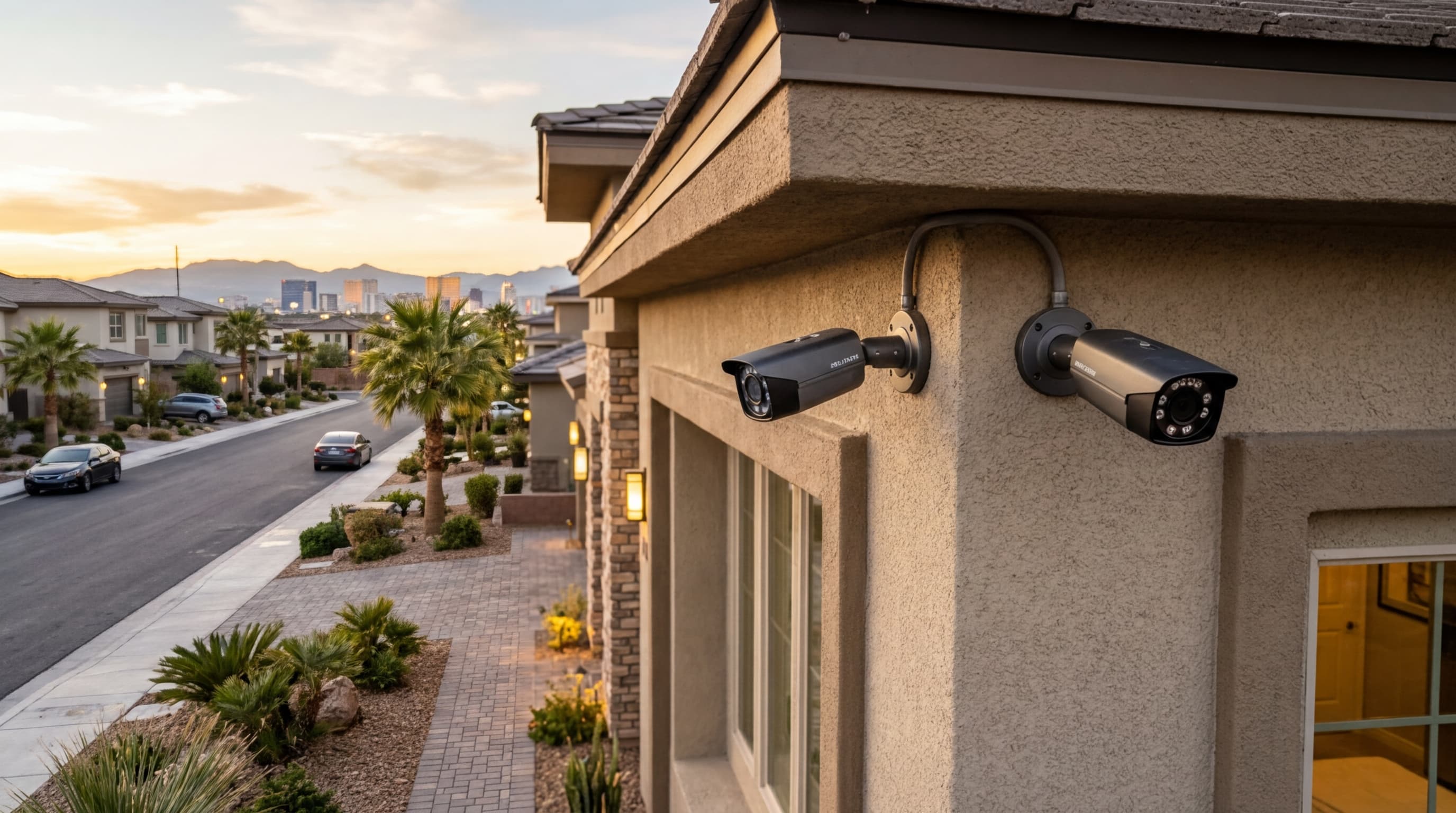
Outdoor cameras do two things: they deter criminals before they act, and they capture evidence if something happens. Visible cameras on the front of your home significantly reduce your risk of being targeted.
What to look for in outdoor cameras:
- Weatherproofing: Las Vegas summers are brutal. Look for IP66 or IP67 rated cameras
- Night vision or color night vision: Most break-ins happen after dark
- Wide angle lens: 110–130° field of view covers more ground
- Motion alerts: Real-time notifications when something triggers the camera
Our security camera installation service covers full outdoor perimeter setups for both homes and commercial properties.
Indoor Cameras — Monitoring What Matters Inside
Indoor cameras are useful for monitoring entry points from inside, watching over valuables, or checking in on kids, elderly family members, or pets. They’re not a substitute for outdoor coverage — think of them as a second layer, not a first line of defense.
Wired vs. Wireless Systems
Wired (PoE/Coax) Systems
Pros:
- More reliable — no Wi-Fi interference or battery concerns
- Better for large properties with many cameras
- Generally higher image quality at equivalent price points
- No batteries to replace
Cons:
- More complex installation (running cables through walls)
- Less flexible if you want to reposition cameras later
Wireless Systems
Pros:
- Faster installation
- More flexible placement
- Works in locations where running cable is impractical
Cons:
- Dependent on Wi-Fi signal strength
- Battery-powered cameras need charging or battery replacement
- Can be disrupted by Wi-Fi jamming devices (rare but possible)
Our recommendation: For permanent installations on homes or businesses, wired PoE systems give you better long-term reliability. For renters or situations where you need cameras quickly, wireless works well.
Resolution: How Much Do You Actually Need?
The marketing push for 4K cameras is largely unnecessary for most residential applications. Here’s what the resolution levels actually mean in practice:
- 1080p (2MP): Sufficient to identify faces and license plates within 15–20 feet
- 2K (4MP): Good balance of detail and storage requirements
- 4K (8MP): Useful for wide areas where you need to zoom in digitally after the fact
For most Las Vegas homes, 1080p cameras in good positions will outperform 4K cameras in poor positions. Placement and lighting matter more than megapixels.
Storage: Cloud vs. Local vs. Both
Cloud storage gives you access to footage from anywhere and protects recordings even if a camera is stolen or destroyed. It typically requires a monthly subscription.
Local storage (NVR/DVR or SD card) keeps footage on-site. No monthly fees, but footage can be lost if equipment is stolen or damaged.
Best practice: Use both. A local NVR gives you continuous recording and fast access; cloud backup protects critical clips.
Las Vegas-Specific Considerations
Heat: Cameras mounted in direct sun on a south or west-facing wall in Las Vegas can reach extreme temperatures. Choose cameras rated for high-temperature operation (look for operating temps above 140°F/60°C).
Sun glare: West-facing cameras in late afternoon can be washed out by direct sunlight. Consider placement carefully — angled overhangs or eaves can help.
HOA restrictions: Many Las Vegas HOAs have restrictions on visible security equipment. Check your CC&Rs before installation — ASAP Security works with HOA communities regularly and can help you find compliant solutions.
Pairing Cameras with a Full Security System
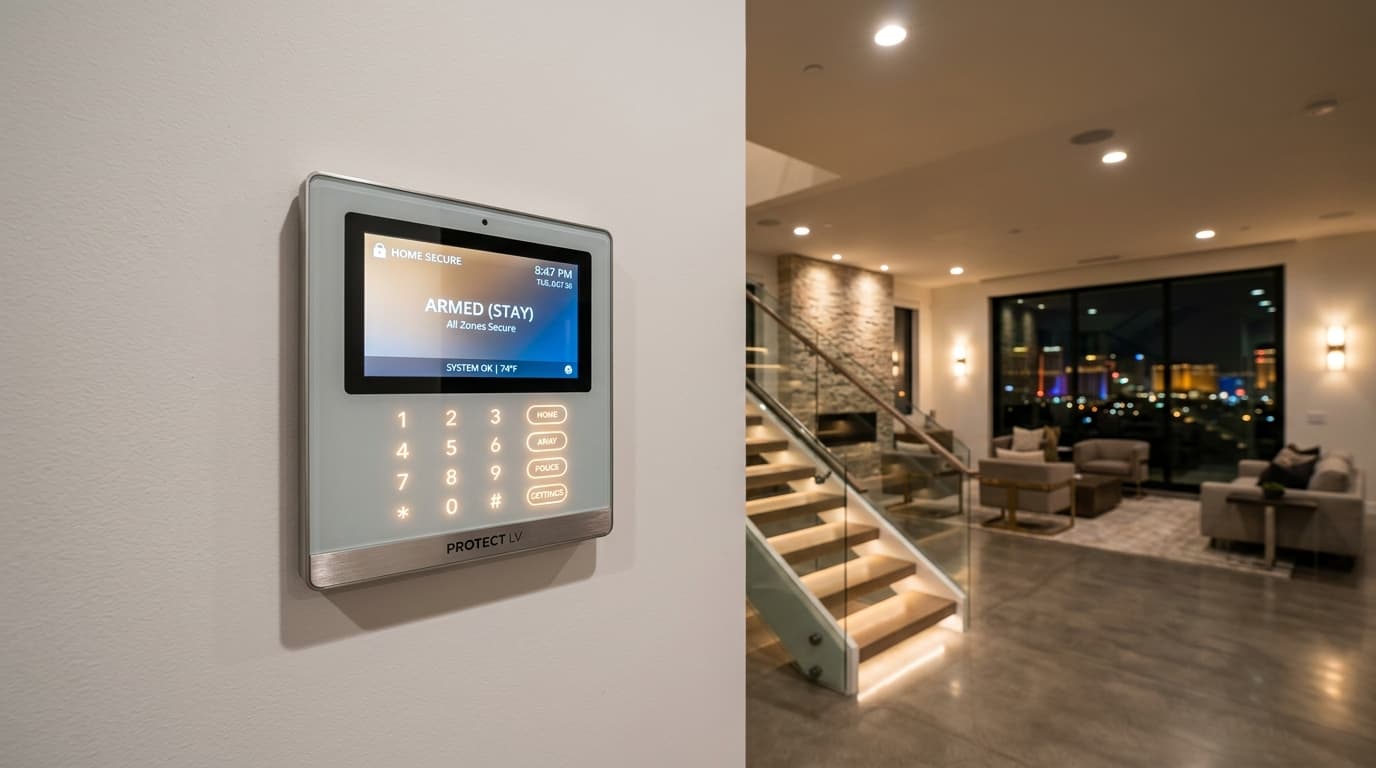
Cameras are most effective when paired with a monitored alarm. When our monitoring center receives an alert, they can immediately pull up camera footage to verify a threat before dispatching police — reducing false alarms and improving response accuracy.
Learn more about complete residential security packages or commercial security systems that combine cameras, alarms, and access control into a single managed solution.