Security screens Las Vegas homeowners are considering should be evaluated as complete, opening-specific systems—not as interchangeable mesh panels. The frame, attachment method, hinges or rollers, lock area, finish, visibility, and daily operation all affect whether a screen is appropriate for a front door, patio slider, or window. ASAP Security’s Las Vegas security screen service provides a local measurement and quote path, but homeowners still benefit from knowing what to compare before choosing a proposal.
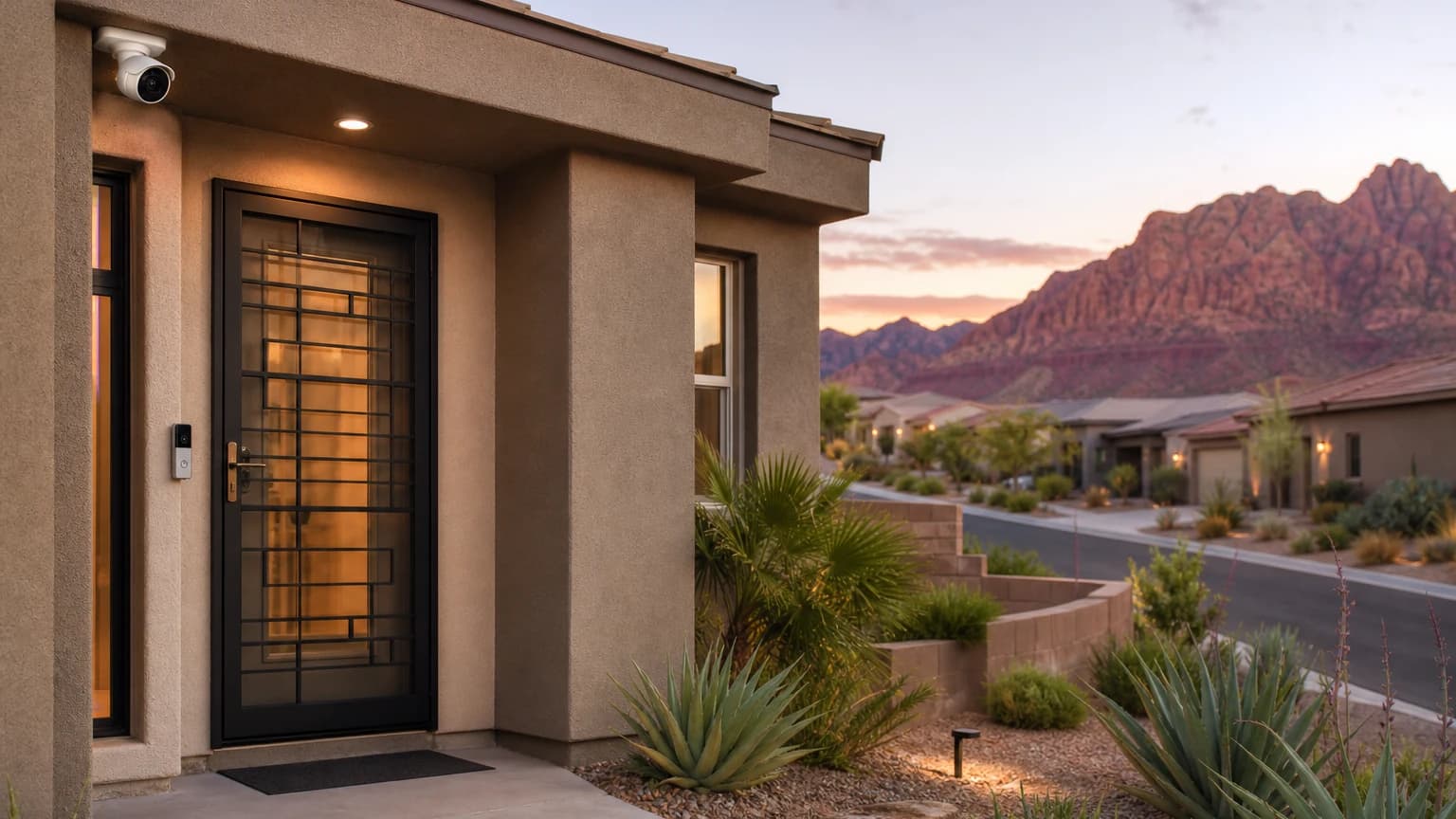
Southern Nevada homes vary widely. A recessed stucco entry in Summerlin presents different fit and sun-exposure questions than a sliding patio opening in Henderson or a street-facing window in central Las Vegas. Start with the exact opening, how the household uses it, and what the screen is expected to accomplish. Then compare written scopes on the same facts.
- Measure and evaluate each door, slider, and window separately before comparing products
- Compare the complete frame, mesh, attachment, hardware, finish, and installation scope—not one material label
- Test visibility, airflow, lock operation, door swing, and household usability in the proposed configuration
- Keep required exits easy to identify and operate, and confirm property-specific safety questions before installation
- Use an itemized written quote so product, preparation, cleanup, exclusions, and support can be compared fairly
Security Screens Las Vegas Homes: Start With the Opening
Make an opening list before requesting estimates. Include the front door, side or garage-entry doors, patio sliders, and any windows under consideration. For each one, record the opening type, approximate dimensions, surrounding material, current lock or latch, direction of travel, nearby trim, and how often the household uses it.
Then note the purpose of the proposed screen. A homeowner may want to open the main door for ventilation while retaining a separate closed barrier. Another may be focused on a patio slider or an accessible window. Those are different use cases, and the proposed configuration should explain how the screen operates at that specific location.
Do not treat an estimate based only on a phone description as a final fit decision. Stucco returns, sloped thresholds, out-of-square frames, decorative trim, existing hardware, and limited attachment areas may not be obvious until the opening is inspected. Ask who takes final measurements, what dimensions are recorded, and who confirms the approved configuration before fabrication or ordering.
The wider household plan matters as well. ASAP Security’s residential security systems page explains how physical openings can be reviewed alongside alarms, cameras, locks, and other residential layers rather than as isolated purchases.
Compare the Frame, Mesh, and Attachment as One Assembly
Homeowners often begin by asking which mesh is strongest. Mesh matters, but a screen is an assembly. The frame, corners, fasteners, attachment surface, hinges or rollers, lock area, and installation workmanship all contribute to how the finished opening operates.
Ask each provider to identify, in writing:
- The proposed frame and mesh materials
- The finish and available color selection
- How the frame attaches to the existing structure
- Hinge, closer, roller, track, latch, and locking hardware included
- Whether existing trim, door hardware, sensors, or screens must be moved
- How gaps, thresholds, drainage paths, and weather exposure are handled
- Which components are custom-sized for the opening
- What maintenance the homeowner will be responsible for
Avoid comparing a named mesh material from one quote with a complete installed system from another. If one proposal omits the frame configuration, hardware, preparation, or finish, ask for those details before deciding that it is equivalent.
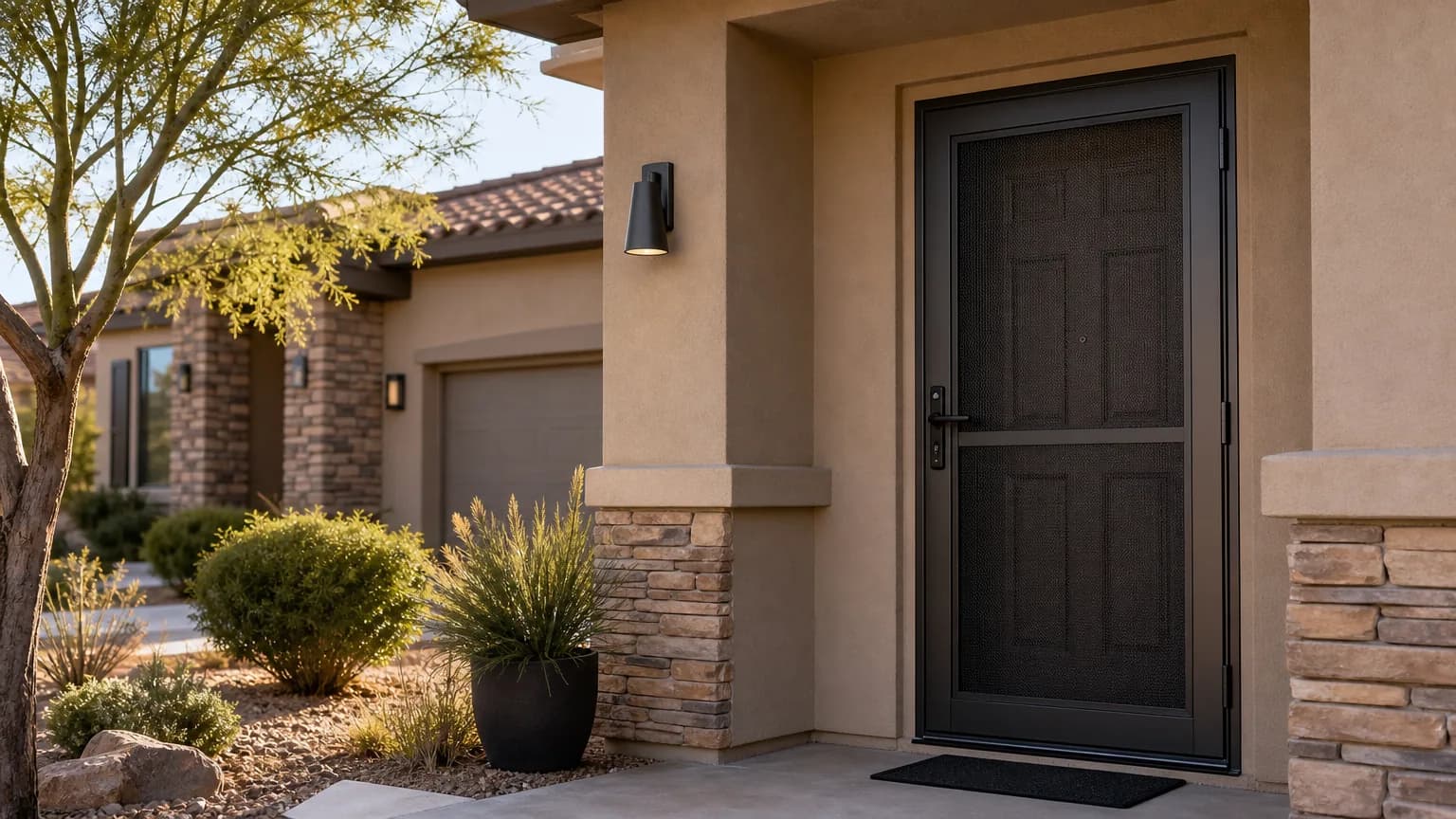
This is also the point to separate ordinary insect screens from the security-screen system being proposed. Ask the installer to demonstrate the actual frame, mesh, latch, and hardware rather than relying on a small material sample. A swatch can show color and visibility, but it cannot show how the full assembly closes, locks, or fits the home.
Test Visibility, Airflow, Shade, and Privacy in Real Conditions
Security screens change the view through an opening. Evaluate that change from both sides and at more than one time of day. A sample viewed under showroom lighting may look different against a shaded porch, a bright west-facing yard, or an interior hallway.
During the consultation, stand inside and outside the opening and ask:
- How clearly can household members see through the proposed mesh in daylight?
- How does the view change when the interior is brighter than the exterior at night?
- Will porch, landscape, or interior lighting create glare or reflections?
- Does the proposed finish work with the home’s trim and HOA requirements?
- Can air move through the opening as the household expects when the primary door is open?
- Will dust, pollen, or wind-blown debris require a practical cleaning routine?
Do not assume a screen creates privacy simply because visibility seems reduced in one lighting condition. Explain the household’s privacy goal and test the actual sample from both directions. Likewise, ask how the mesh and finish should be cleaned without damaging coatings or hardware. Las Vegas dust can make a clear maintenance plan more valuable than a vague instruction to “clean as needed.”
Review Locks, Handles, Hinges, and Daily Operation
A security screen that is awkward to use will become a daily frustration. Everyone who regularly uses the opening should understand how it opens, latches, locks, and works with the primary door or window.
For hinged doors, check handle clearance, hinge side, swing path, closer behavior, threshold, and the relationship between the screen and primary door. Confirm that either door can open through its intended range without handles, trim, lights, railings, or walls interfering. Ask whether the screen will remain stable when closing and how the closer is adjusted.
For sliding openings, review the track, roller access, handle clearance, lock operation, and how the panel is removed for service. For windows, confirm how the screen affects normal opening, cleaning, maintenance, and any room-specific exit needs.
Have the installer demonstrate the proposed lock or latch. Ask what keys or credentials are provided, whether duplicate or replacement access is available, and who services alignment or hardware later. Avoid unsupported assumptions about compatibility with existing smart locks, alarm contacts, or door hardware; those details should be checked for the exact products and opening.
Keep Emergency Egress and Household Access in the Plan
Security should not make it confusing or difficult for household members to leave. Review every proposed door and window screen against the home’s fire-escape plan, the room’s use, and any property-specific requirements. The National Fire Protection Association’s home fire escape guidance recommends identifying two ways out of each room when possible and checking that doors and windows on escape routes open easily.
Ask these questions before approving an opening:
- Is this door or window part of the household’s planned exit route?
- Can every regular occupant operate the screen without searching for a key or unfamiliar release?
- Does the new frame reduce or change the usable opening?
- Could furniture, curtains, blinds, or another door block operation?
- Do children, older adults, guests, or people with mobility limitations need a different arrangement?
- Who will confirm applicable building, fire, HOA, or property requirements when a question arises?
Do not accept a general statement that one configuration works everywhere. An opening used for emergency escape deserves a property-specific review by the appropriate qualified professional. After installation, include the screen in household escape practice so operation is familiar before an emergency.
Decide Where Screens Fit Within Layered Home Security
Security screens address selected physical openings. They do not provide camera views, alarm notifications, lighting, monitoring, or household access management. Map the screen locations against the rest of the home so the proposal solves a defined physical need without leaving other priorities unexamined.
The related residential perimeter security guide shows how screens, cameras, video doorbells, sensors, and lighting can take distinct roles around one property. Homeowners comparing providers may also use the questions to ask a Las Vegas security company to evaluate licensing, scope, service, and contract details beyond a single product.
For families, normal routines should shape the plan. Consider children coming home, guests using the entry, pets near an open doorway, deliveries, accessibility, and who will lock the screen at night. ASAP Security’s home security for Las Vegas families page provides a household-focused view of alarms, cameras, locks, and entry technology.
Location experience can matter when discussing stucco openings, direct sun, dust, desert landscaping, and HOA review. ASAP Security’s Las Vegas security service overview explains the company’s broader Southern Nevada service context without treating every home as the same layout.
Compare Itemized Quotes, Not Just Final Prices
Give each provider the same opening list and ask for an itemized written scope. The quote should make it possible to identify what is included, what is excluded, and what could change after final measurement.
Look for:
- Exact openings and quantities covered
- Product configuration, frame, mesh, finish, and hardware
- Measurement and approval process
- Removal, disposal, patching, trim, paint, or repair responsibilities
- Treatment of existing locks, sensors, doors, windows, or screens
- Installation, alignment, demonstration, and cleanup
- Anticipated ordering or fabrication sequence without unsupported promises
- Payment schedule and change-order process
- Written product and workmanship support terms
- Clear exclusions and homeowner preparation requirements
If one quote is much lower, identify the missing scope before treating it as savings. If one is much higher, ask what additional product, preparation, hardware, or support it includes. Do not rely on an oral promise to resolve an omitted item later.
Photograph the openings before work and keep the approved product details with the quote. At final walkthrough, compare the completed work with that record, operate every screen, and document any correction before sign-off.
Use a Final Walkthrough Before Accepting the Installation
Test each opening the way the household will use it. Open and close the screen several times, operate the latch and lock from the intended sides, and confirm that the primary door or window still works normally. Look at gaps, alignment, hardware clearance, threshold transitions, and the attachment area.
Complete this short handoff:
- Demonstrate opening, closing, locking, and any release to all regular users
- Confirm the number of keys or access items delivered
- Review cleaning and maintenance instructions
- Identify the support contact and information needed for service
- Record the final finish and hardware configuration
- Add the opening to the household’s security and escape checks
The goal is not merely a screen that looks complete. It is an opening that matches the approved scope, operates predictably, and can be used confidently by the household.
Frequently Asked Questions
What should I compare when buying a security screen?
Compare the complete opening-specific system: measurements, frame attachment, mesh, hinges or rollers, locking hardware, finish, visibility, daily operation, egress needs, installation scope, and written support terms. A material name by itself does not explain how the finished screen will fit or function.
Can security screens replace an alarm or camera system?
Security screens address the physical opening, while alarms, cameras, lighting, locks, and household routines address other parts of a security plan. Homeowners should evaluate those layers together rather than expect one product to cover every approach or event.
Should every door and window use the same security screen?
Not necessarily. A front door, patio slider, bedroom window, and utility opening may have different dimensions, operating patterns, visibility priorities, and safe-exit requirements. Each opening should be measured and reviewed before a product or configuration is selected.
How can I compare security screen quotes fairly?
Give each provider the same opening list and ask for an itemized written scope covering product configuration, finish, hardware, removal or repair work, installation, cleanup, demonstrations, exclusions, schedule, payment terms, and support. Resolve unclear allowances before comparing totals.
Bring an Opening List to the Consultation
ASAP Security is locally owned and has served Southern Nevada since 2003. The company is a First Alert PRO / Resideo partner, holds Nevada Contractor License #0058622, and maintains a BBB A+ rating. Its office is at 3170 Polaris Avenue, Suite 4, Las Vegas, NV 89102.
For help measuring openings and comparing practical screen options, request a no-pressure security screen quote or call (702) 870-8880. Bring your opening list, photos, finish preferences, and questions about daily operation so the conversation begins with your home rather than a generic package.