
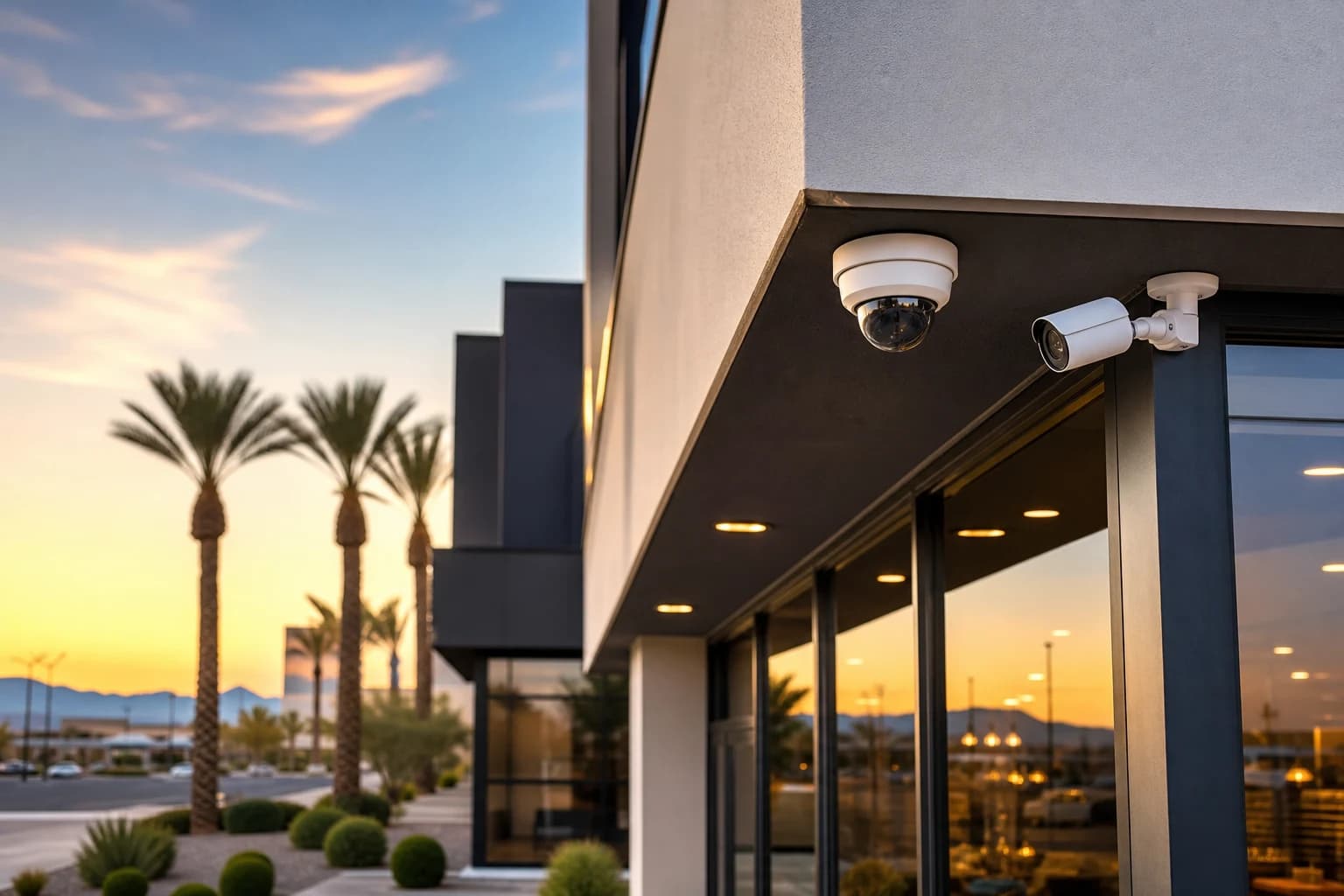
Choosing commercial security cameras in Las Vegas means weighing more than resolution and price. A retail counter near the Strip has different coverage needs than a North Las Vegas warehouse loading dock or a Summerlin office lobby, and the Valley’s summer heat puts real limits on which outdoor cameras hold up long-term. ASAP Security has installed and serviced commercial security cameras in Las Vegas since 2003, and the systems that perform best are built around how a specific business operates day to day, not a generic package.
- Camera type and placement should follow how the business runs: entrances, cash handling, loading docks, and parking lots first
- Las Vegas heat and sun angle affect outdoor camera reliability; look for high-temperature ratings and shaded mounting
- Cloud and local NVR storage solve different problems, and most commercial systems end up using both
- Cameras are most useful paired with alarm monitoring and access control, not installed as a standalone system
- A walkthrough of the property beats a fixed camera-count package
Types of Commercial Security Cameras for Las Vegas Businesses
Not every camera fits every part of a commercial property. Matching the camera to the location it’s covering makes a bigger difference than chasing the highest resolution on the spec sheet.
- Dome cameras work well at entrances and inside retail or office spaces. The housing makes the lens direction harder to identify, which discourages tampering.
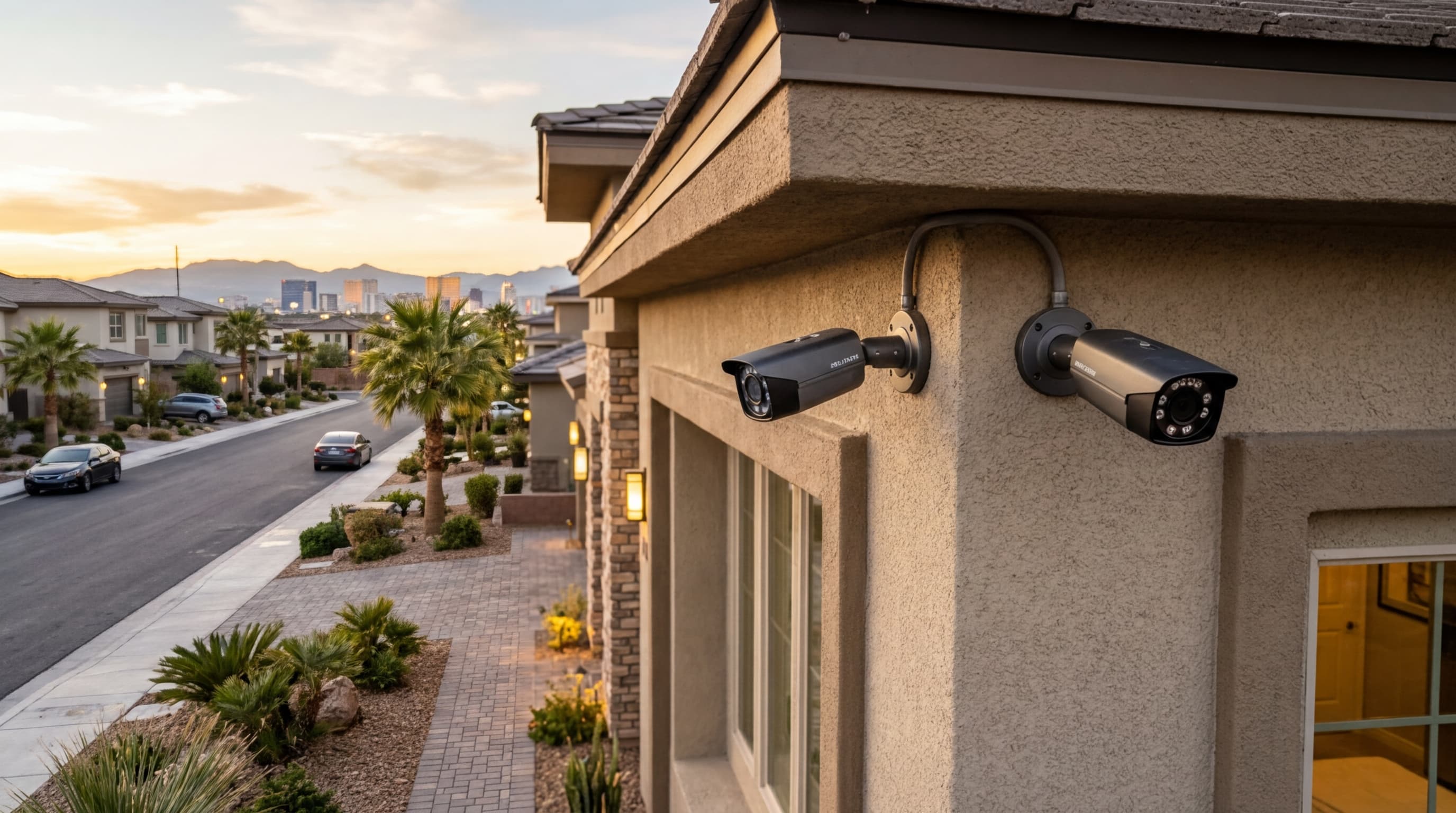
- Bullet cameras suit long, directional views like a driveway, loading dock, or the length of a parking row.
- Turret cameras are a flexible middle ground for building exteriors, with a low profile and a wide field of view.
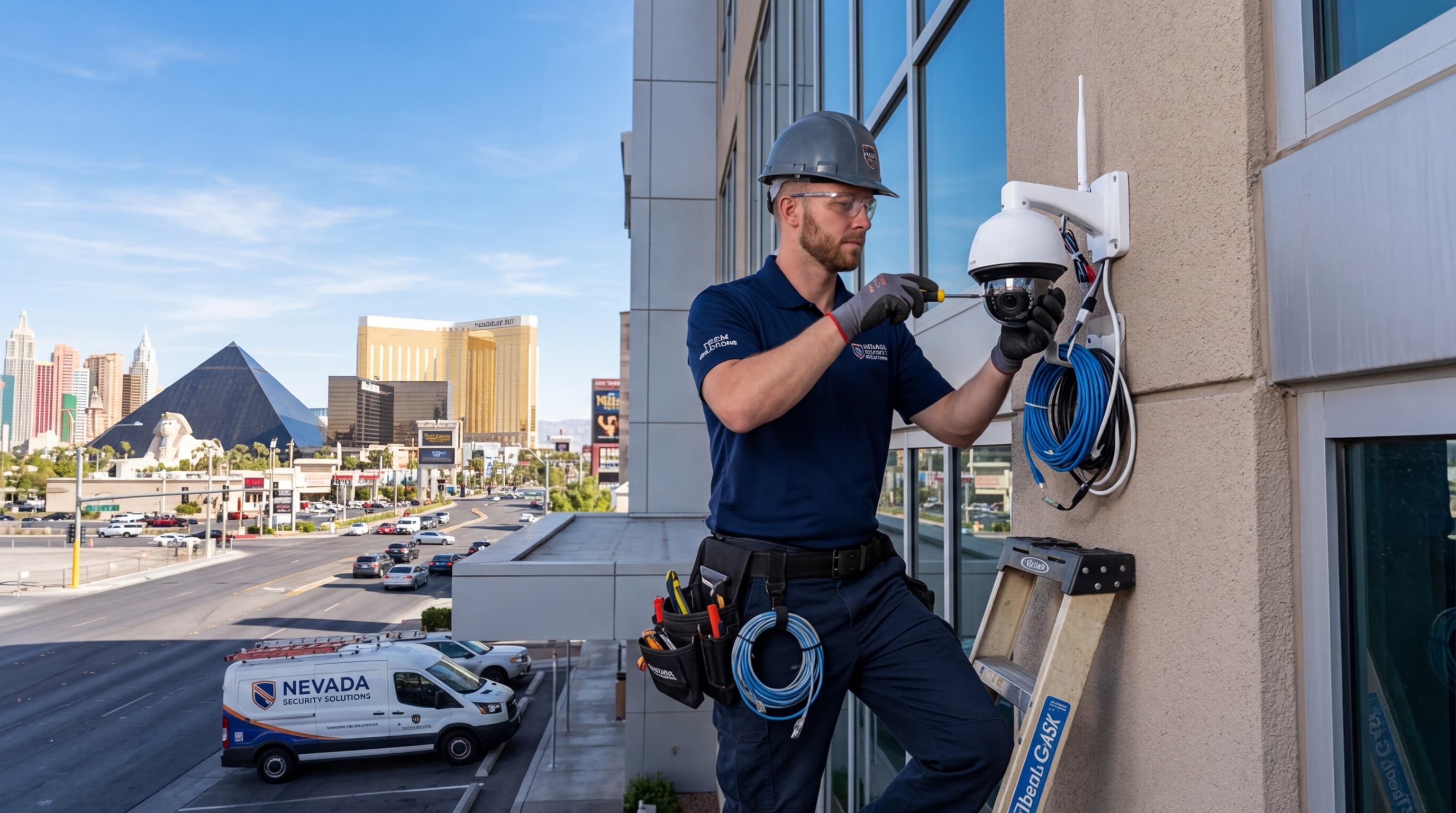
- PTZ (pan-tilt-zoom) cameras make sense for larger properties, such as a warehouse yard or multi-acre lot, where someone may need to follow movement in real time rather than rely on a fixed frame.
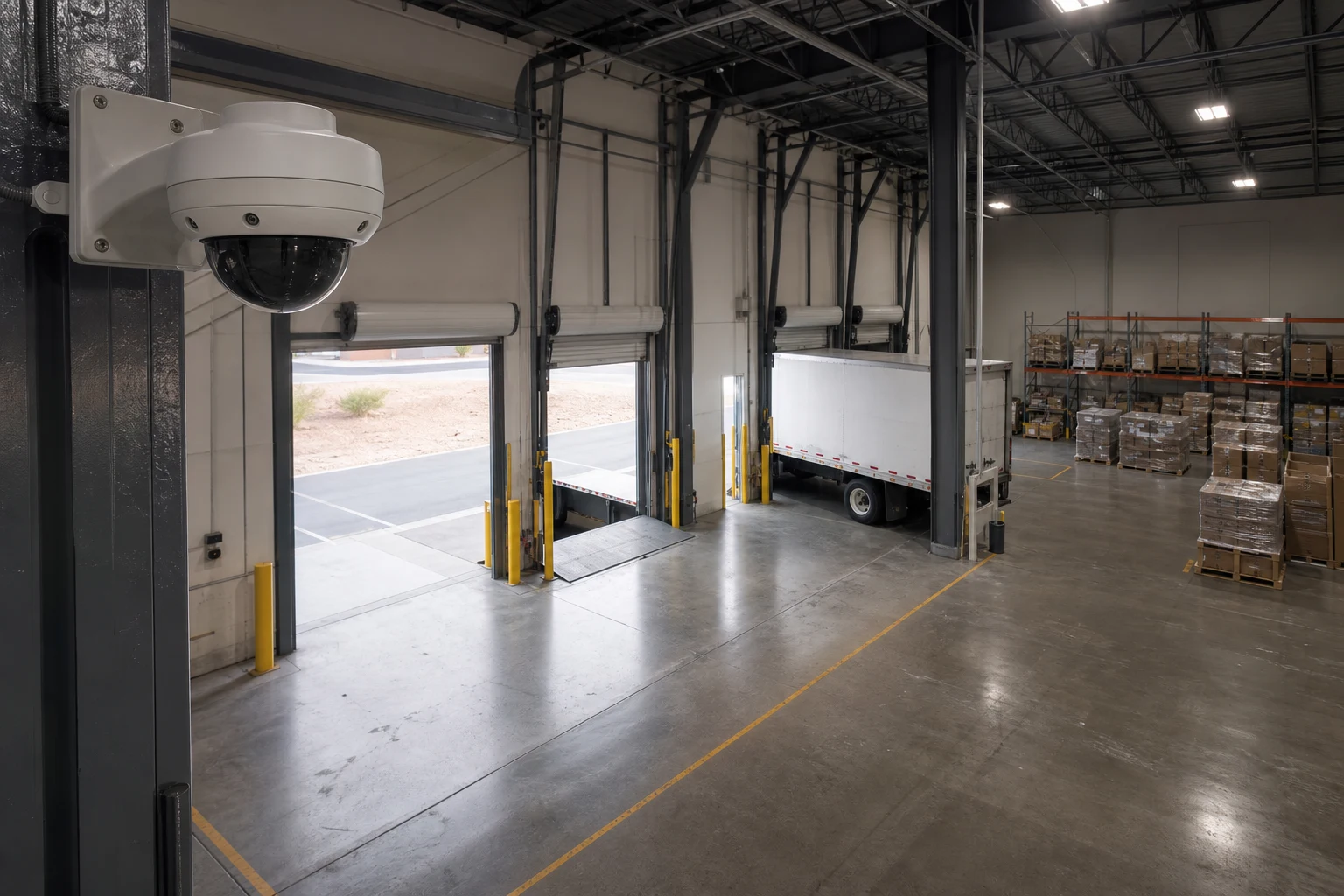
The right mix depends on what the property is. A North Las Vegas business might need a wide-angle bullet camera covering a loading dock and a separate set of dome cameras inside a warehouse office, while a retail storefront closer to the Strip may need denser coverage concentrated on entrances, registers, and stockroom access. Our security camera installation team maps coverage against the property’s floor plan before recommending a camera count, instead of starting from a preset package.
Indoor and Outdoor Placement: Where Coverage Matters Most
Every commercial property has priority zones. For most Las Vegas businesses, that list starts with:
- Entrances and exits: the areas with the most foot traffic and the first thing a camera should cover
- Cash handling and point-of-sale areas: useful for both loss prevention and resolving customer disputes
- Loading docks and back entrances: often the least visible part of a property and a common target for theft
- Parking lots and perimeters: wide-angle outdoor cameras that also help with liability documentation if an incident happens on the property
Outdoor cameras in Las Vegas need to survive conditions most manufacturers don’t design around. Look for an IP66 or IP67 weatherproof rating and an operating temperature rated to at least 140°F, since cameras mounted in direct summer sun can run well above the surrounding air temperature. West- and south-facing cameras are prone to glare for several hours a day; mounting under an eave or overhang, or choosing a camera with wide dynamic range, keeps footage usable during those windows.
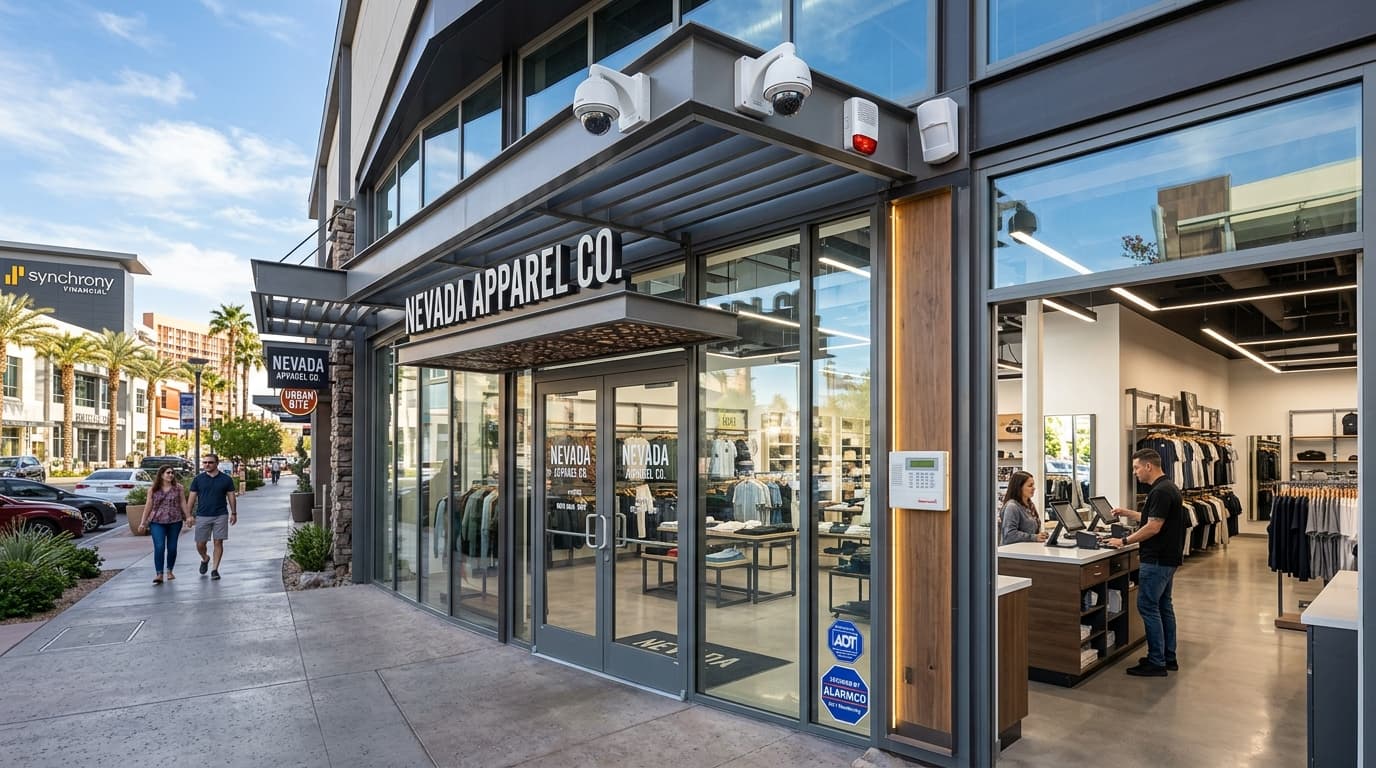
Poor placement is one of the most common issues we find when we’re called in to evaluate an existing system: cameras aimed too high to identify faces, gaps between coverage zones, or a single camera expected to cover an entire lot. Our guide to common business security mistakes goes into more detail on how these gaps happen and how a site assessment catches them before installation.
Storage, Remote Access, and Multi-Location Management
Commercial camera systems rely on one of three storage approaches:
- Local NVR/DVR storage: continuous recording on-site with no monthly fee, though footage is vulnerable if the recorder itself is stolen or damaged
- Cloud storage: accessible from anywhere and protected even if a camera or recorder is tampered with, typically billed as a subscription
- Hybrid: continuous local recording with cloud backup for motion-triggered clips; this is what most commercial customers end up choosing
For a business owner checking in from off-site, remote smartphone access and a multi-camera view on a single screen matter as much as the camera hardware itself. This matters for businesses managing more than one Las Vegas Valley location: you can monitor a Summerlin office, a Henderson warehouse, and a retail space near the Strip from the same dashboard instead of juggling three separate systems. Our commercial security team can walk through what a centrally managed setup looks like for a multi-location business.

Integrating Cameras with Alarms and Access Control
A camera system that operates independently from the rest of a business’s security setup is doing less work than it could. When cameras are tied into alarm monitoring, someone can visually verify a triggered alarm before dispatching police, which speeds up a legitimate response and reduces the odds of a false-alarm fee.
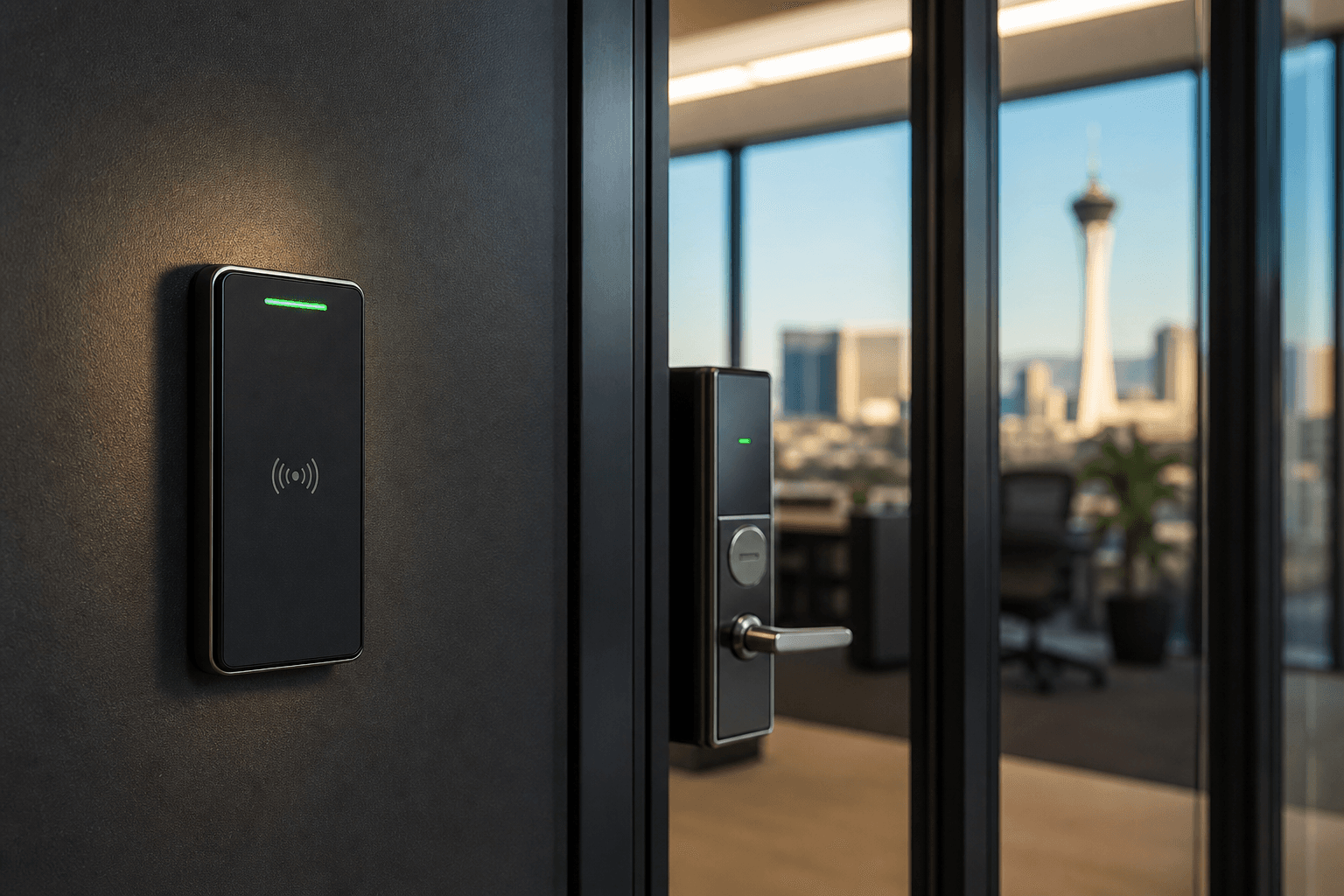
The same logic applies to access control. Pairing cameras with keycard, fob, or mobile-credential readers means a business owner can see who used a credential and when, not just that a door was opened. For a full breakdown of how access control works for Las Vegas businesses, including audit trails and instant credential revocation, see our guide to access control systems for Las Vegas businesses.
Employee Privacy and Recording Practices
Camera placement inside a business should account for employee privacy as well as coverage. Common areas, entrances, registers, and stockrooms are standard places for cameras. Restrooms, break rooms, and other private spaces are not.
Most businesses post basic signage noting that the premises are under video surveillance and cover the topic during onboarding. Beyond that, recording and notification practices can vary by situation, so it’s worth a quick conversation with your attorney or HR advisor when finalizing camera placement and any written policy. That part isn’t something a security installer can advise on.
Frequently Asked Questions
How many cameras does a typical Las Vegas business need?
It depends on the layout. A single-entrance office might need four or five cameras, while a warehouse with multiple loading docks and a parking lot could need many more. A walkthrough of the property is a better starting point than a fixed number.
Should a Las Vegas business use cloud storage or a local NVR?
Most commercial customers end up using both. Local storage handles continuous recording without a monthly fee, and cloud backup protects key footage, like motion-triggered clips, even if a camera or recorder is damaged or stolen.
Can commercial security cameras integrate with an existing alarm or access control system?
In many cases, yes, though it depends on the age and type of the existing equipment. It’s worth having a technician evaluate what’s currently installed before assuming everything will connect without upgrades.
Do commercial security cameras need to be professionally installed?
They don’t have to be, but professional installation is where most coverage gaps get caught: blind spots, poor mounting height, cable routing, and weatherproofing issues that are easy to miss without experience mapping a commercial property.
Talk to ASAP Security About Your Business’s Camera System
ASAP Security is locally owned and has served Southern Nevada businesses since 2003. The company is a First Alert PRO / Resideo partner, holds Nevada Contractor License #0058622 and Locksmith License LV L0600194-E107635, maintains a BBB A+ rating, and is based at 3170 Polaris Avenue, Suite 4, Las Vegas, NV 89102.
For a walkthrough of your property and a camera plan built around how your business runs, request a restrained, no-pressure quote or call (702) 870-8880.
Related Articles
Access Control Systems for Las Vegas Businesses: What You Need to Know in 2026
7 min read
Business Security Services: Top 5 Mistakes Las Vegas Businesses Make
6 min read
How to Choose a Security Camera System in Las Vegas, NV: A Complete Guide
6 min read
Security Cameras in Las Vegas: Indoor vs. Outdoor, Wired vs. Wireless
6 min read